Contracting authority
Overview
A contracting authority is the public organization that publishes a notice — the buyer in a procurement procedure. In Tendersight, authority profiles aggregate every notice that organization published in indexed sources: ministries, municipalities, hospitals, universities, utilities, and other public entities.
Authority data is read-only market intelligence, like notices themselves. You cannot create, edit, or merge authority records. Tendersight syncs from official European sources (SEAP, TED, and national portals). Use authority profiles to understand buying patterns, incumbent suppliers, publication cadence, and procedure preferences before you commit pursuit resources.
On a Notice overview, the contracting authority name in key facts links to the same profile you reach from Analytics → Contracting authorities. Research and action are separate: analytics informs bid/no-bid; Create pursuit on the notice starts execution.
Tip: Before pursuing a buyer's new tender, confirm you have:
Opened the authority Statistics tab — seasonality and competition level
Reviewed Companies (top winning suppliers) for incumbent risk
Browsed Tenders for similar CPV and contract types
Set an alert with authority filter if you target this buyer repeatedly
Completed Team → Settings if you proceed to Create pursuit
Important: Authority profiles describe historical and current publications. They do not guarantee future spend or procedural choices. Always read the latest notice version and tender documents before bidding.
Authority vs notice vs pursuit
One authority publishes many notices over time. One notice links to one authority (buyer). Your team creates at most one pursuit per notice.
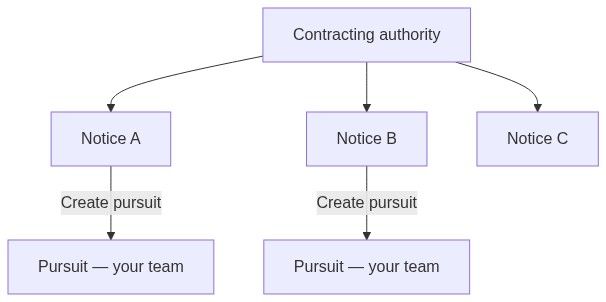
See Notice (Tender) for notice detail and Pursuit for bid workspace.
Where to find contracting authorities
Standalone pursuit creation accepts a manual authority name — look up spelling in the directory first so your internal records stay consistent.
Authority profile structure
Click an authority from the directory or a notice link to open its profile. Inner tabs:
The Tenders view and overview route show the same tender list — use it to scan open and historical procedures before opening individual notices.

Directory list and filters
Open Analytics → Contracting authorities for the Contracting authorities directory.
Typical filters and columns:
Row click → authority profile. Use export for offline account planning or CRM import — exported data remains read-only in Tendersight.
Tip: Pair directory research with Alerts: once you identify target authorities, add an authority rule to a ruleset so new publications surface in Opportunities → Alerts → Activity without repeating manual searches.
Statistics highlights
Authority statistics answers strategic questions in tabbed views. URL ?tab= deep-links a tab for sharing with colleagues.
How to use statistics in bid/no-bid
Statistics inform whether and how to bid; the notice detail and pursuit modules hold your answers.
Key fields on authority records
On Notice overview, authority fields copy into pursuit context at creation — changing your pursuit notes does not change the authority record.
From research to pursuit — recommended workflow
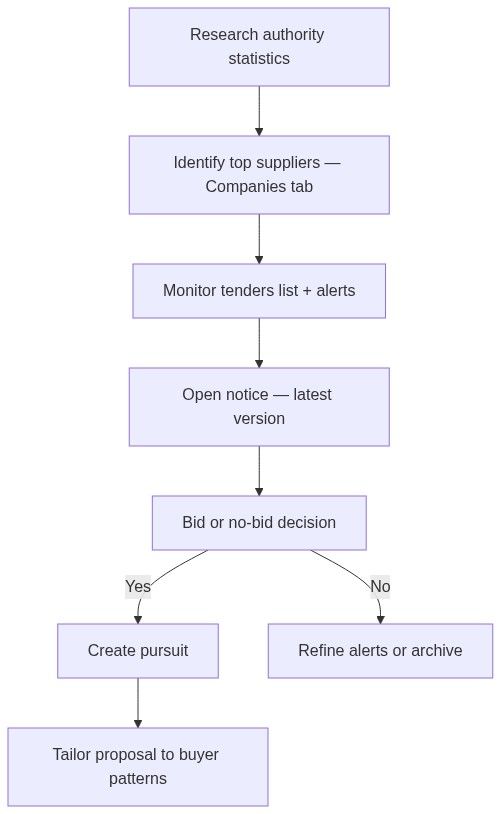
Discover — directory search, market statistics, or notice key facts link.
Profile — read Statistics (overview + trends) and Companies for incumbents.
Scan tenders — open relevant notices; confirm latest version, deadline, lots.
Monitor — authority-filtered alert or periodic directory revisit.
Decide — bid/no-bid using value, competition, and team capacity.
Execute — Create pursuit on the notice (or standalone if unindexed); work in pursuit modules.
See First pursuit workflow and Getting started workflow.
Authority in alerts and dashboards
Alerts are often team-scoped; switch active team before creating shared monitoring. Authority data in widgets remains read-only.
Link to market companies
Authority Companies statistics tab links to market company profiles — the suppliers who win this buyer's contracts. Use this for:
Incumbent analysis before pricing
Consortium partner research (also see company Connections)
Cross-checking whether your team has won with this authority before (fiscal match on your company profile)
What you can do (and what you cannot)
You can
Browse and filter the authorities directory
Open statistics and tender history for any indexed authority
Navigate from notices, companies, and dashboards into authority profiles
Seed alert rules with authority filters
Export directory results (per plan)
You cannot
Edit authority name, fiscal identifier, or tender history
Create a custom authority record for private buyers not in public data
Create a pursuit from the authority profile alone — open a notice and click Create pursuit
Force a sync — updates arrive on Tendersight's schedule from official sources
For private RFPs without a synced authority, use New standalone pursuit and type the buyer name manually.
Permissions snapshot
Full matrix: Permissions and access.
FAQ
What is a contracting authority?
The public organization that publishes a procurement notice — the buyer, not the bidders.
How is an authority different from a notice?
The authority is the organization. A notice is one specific call for tenders they published. One authority has many notices over time.
Can I edit an authority profile?
No. Records sync from official sources. Update your pursuit notes if your internal naming differs.
How do I monitor one authority for new tenders?
Add an authority filter to an alert ruleset, or periodically open Authority tenders on their profile.
Why does the authority on my pursuit differ from the directory name?
Standalone pursuits use manual text. Notice-backed pursuits copy the name at creation time. The directory shows the synced canonical name from publications.
Can I create a pursuit from the authority page?
Not directly. Open a specific notice from the authority's tender list, then Create pursuit.
Where do I see who wins this authority's contracts?
Authority statistics → Companies tab, or individual Notice → Participants after award.
Do authorities appear in financial or technical offer modules?
The pursuit may show authority name from notice context. Offer modules use team settings and team products — not authority profile edits.
How do I research authorities in a country I do not usually bid in?
Filter Analytics → Contracting authorities by country, then use Statistics and Tenders before committing pursuit resources.
Related articles
Contracting authorities directory
Authority tenders
Authority statistics
Notice (Tender)
Notice overview
Company (market)
Alerts list
How information flows